
Global Justice: Understanding International Criminal Law for Nonlawyers

Overview
International Criminal Law (ICL) is crucial for ensuring justice and peace worldwide. It contains rules to hold individuals, armed groups, and governments accountable for serious international crimes like genocide and war crimes, making sure those responsible are punished and victims are supported. By understanding ICL, we help prevent future atrocities and promote human rights globally. It’s not just about legal duties; there’s also a moral responsibility to address and prevent these crimes. Knowing about ICL empowers people to support justice and human rights across the world.
Taught by some of the world’s leading experts, the course "Foundations of InternationalCriminal Law for Everyone" provides an essential starting point for anyone looking to broaden their understanding of global legal issues around atrocity prevention and response. It equips participants with the skills needed to comprehend modern international justice systems and design new ones, engage in discussions on related topics, such as providing humanitarian assistance and conflict resolution, and advocate for victims of serious international crimes, including regarding reparations.
Accessible and tailored for busy professionals, this online program includes flexible modules, engaging multimedia content, and interactive forums. The course empowers participants to identify and document international crimes, advocate for justice, and support global efforts to prevent violations, ultimately enabling informed decisions that foster human dignity and societal change.
Course Highlights
This course provides you with a comprehensive understanding of the origins, principles, core crimes, institutions, and practical implementation of ICL, with emphasis on real-world applications, legal accountability, and transitional justice systems.
Learning Outcomes
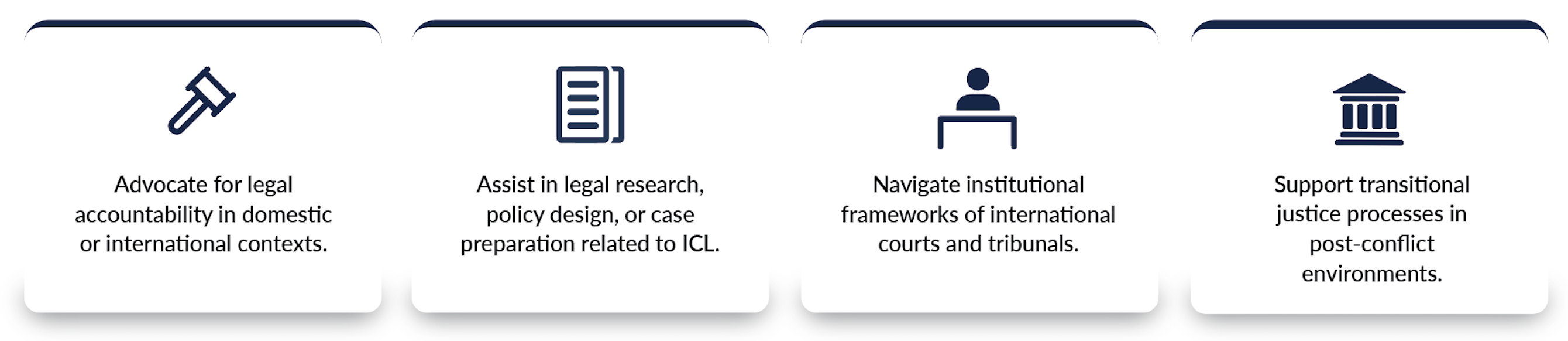
After completing this course, you will be able to:
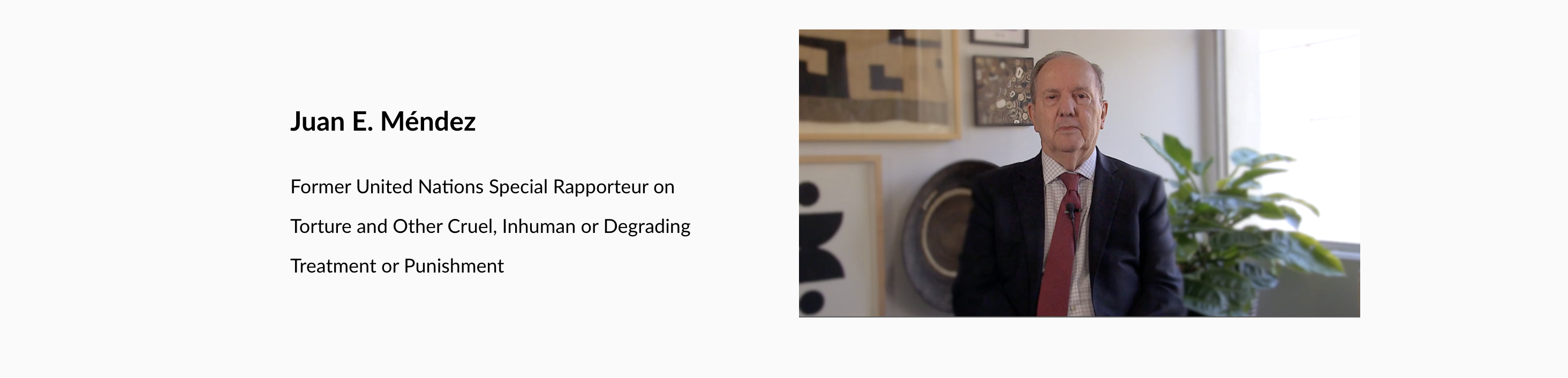
Featured Guest Speakers





Instructors
Phuong Pham, PhD, MPH
Phuong N. Pham, PhD, MPH an Associate Professor at Harvard Medical School and Harvard T.H. Chan School of Public Health, serves as the Director of Education at the Harvard Humanitarian Initiative, and is the co-founder of KoboToolbox. With an extensive background spanning over two decades, she specializes in the design and implementation of epidemiologic and evaluation research, as well as the development of innovative technology solutions and educational programs. Her expertise extends to regions impacted by both ongoing conflicts and post-conflict scenarios, including northern Uganda, Colombia, the Democratic Republic of the Congo, Rwanda, the Central African Republic, Iraq, Cambodia, Colombia, and other areas affected by mass violence and humanitarian crises. Currently she lead the following programs at HHI: Transitional Justice Evaluation Team (TJET), Humanitarian Studies Concentration, Building a Better Response (BBR), Local Engagement and Response Network (LEARN), and Peace and Human Rights Data.
Patrick Vinck, PhD
Patrick Vinck, Ph.D. is the Research Director of the Harvard Humanitarian Initiative. He is assistant professor at the Harvard Medical School and Harvard T.H. Chan School of Public Health, and lead investigator at the Brigham and Women's Hospital. His current research examines resilience, peacebuilding, and social cohesion in contexts of mass violence, conflicts and natural disasters. His research has lead him to examine the ethics of data and technology in the field. He is the co-founder and director of KoBoToolbox a data collection service, and the Data-Pop Alliance, a Big Data partnership with MIT and ODI. Patrick Vinck is also an Adjunct Associate Professor at Tulane University’s Payson Center for International Development; and a regular advisor and evaluation consultant to the United Nations and other agencies. His work is informed by several years in the field and research on the multiple dimensions of food security. He has been published in journals covering a wide range of disciplines, including political science, social science, public health and medicine. He graduated as an engineer in applied biological sciences from Gembloux Agricultural University (Belgium), and holds a Ph.D. in International Development from Tulane University.
Intended Audience
The target audience includes anyone interested in gaining a better understanding of International Criminal Law, with particular focus on humanitarian actors, public health professionals working in crisis zones, students in public health, international relations, political science, and human rights, journalists covering human rights violations, and policy professionals in think tanks and human rights organizations. This is course is designed for a non-specialist and cross-professional audience.
The content of this course can inform the work of:
- humanitarian actors who need to understand international criminal law,
- public health professionals working in crisis zones that may experience attacks on hospitals or the use of Chemical, Biological, Radiological, and Nuclear Explosives (CBRNEs) in war scenarios,
- students in public health, international relations, political science, and human rights majors,
- journalists covering human rights violations, and
- policy professionals working in think tanks and human rights organizations.
Course Logistics
Register and enroll in this course.
Tuition: $950
Discounts available for humanitarian workers in NGOs, international NGOs, and UN agencies as well as for those from Least Developed Countries (LDCs).
Email: HHI_learning@harvard.edu if you have questions about this course.

