
Elisabeth B. Weintz Humanitarian Award
About the Award
The Elisabeth B. Weintz Humanitarian Award was established at HHI in 2015 to honor a visionary public figure who has demonstrated superior leadership in a time of humanitarian crisis. The Award celebrates the memory of Elisabeth "Betsy" Weintz by recognizing her outstanding contributions to humanitarian leadership at Harvard University. In addition, this Award provides a $10,000 grant to a postdoctoral fellow or faculty at Harvard University whose work aligns with that of the awardee and HHI’s mission.
Past recipients include:
- Peter Maurer
- Nancy Lindborg
- Nadia Murad
- Bryan Stevenson
- Heba Aly
- Dr. Tedros Adhanom Ghebreyesus
- Dr. Javid Abdelmoneim
Nomination considerations
- Extraordinary contributions toward alleviating human suffering
- Serving as a humanitarian leader role model
- Unique accomplishments to improve the lives of communities in humanitarian crisis
- Significance of humanitarian issue
- Established record of achievement and impact in the humanitarian field
- Long-term impact and potential of the individual and their contribution
- Demonstrated efforts to decolonize the humanitarian field, tackle historical injustices, and address localization
Nomination Process and Timeline
HHI issues an annual call for nominations and invites its Steering Committee and team members to submit a nomination. An internal review committee convenes to select a postdoctoral fellow or faculty nominee. The HHI Director announces the awardee and an online or in person award ceremony is planned where the awardee receives the award. The nomination process usually takes 3 months.
The Weintz Family Legacy
"My parents, Fred & Betsy Weintz, were always philanthropic. Betsy volunteered at our local hospital and my father gave financially to various causes and served on several non-profit boards. Initially, their charitable efforts were somewhat haphazard but they became much more structured, directed and deliberate when they established the Harbor Lights Foundation which required annual grantmaking and focused investment strategies to preserve and, hopefully, grow the foundation’s principal. The original mission statement for HLF leaned heavily on the “Give a man a fish and you feed him for a day; teach a man to fish and you feed him for life” proverb.
That said, early on the majority of grants were directed toward education, especially to benefit institutions my parent’s credited for their own education and subsequent success – Stanford, Harvard, Norwich and Pace University (which acquired Briarcliff, my mother’s alma mater).
Once my siblings and I were either college-bound, in college or graduates, we were invited to the HLF Board. This meant annual meetings to review investments, rebalance diversified portfolio allocations and, of course, make new or adjusted grant proposals based on individual interests, capital campaigns and new sectors worthy of HLF’s consideration. New grants were more likely to get funded if you presented a thorough, well thought out pitch, with much more weight placed on organizations where you actually devoted your time. Who knew giving away money, at least when done seriously and conscientiously, requires a lot of work! A great life lesson we were fortunate enough to learn at an early age.
As HLF evolved into a family entity, health sector giving increased, with most significant funds going to Americares, largely the result of my employment there after college in the organization’s early days. I was hired by founder Bob Macauley in 1988 to be a “project manager.” Up until that point, Americares sent medications, medical supplies and nutritional supplements to international man-made or nature-made disasters and would then turn them over to trusted, established, in-country organizations like the Knights of Malta for distribution. Shortly after I was hired, I convinced Bob to allow me to stay in-country to directly oversee supply inventory and distribution. This also allowed me to assess needs on the ground and offer ways for Americares to address them. In effect, I became Americares’s “field guy.”
During my tenure with Americares, I traveled to 25 countries responding to 43 different disasters where I witnessed unimaginable widespread destruction, untold suffering and remarkable human resilience. Although I was rarely in the U.S., when I was, I devoted most of my time to interviews with local and national news organizations or meetings with Senators and Congress members to raise awareness and possibly steer funds to some of the world’s problem areas.
Behind the scenes, I would spend my time lamenting to my parents the uncertainty I felt regarding the effectiveness of my efforts in the field. After all, I was in my mid-20’s with an economics degree and some experience in investment banking and shoestring travel. In all honesty, I had no medical background, triage experience, or expertise in supply distribution. Who was I to be making these decisions on the fly, in the field, in real time, while the disasters were unfolding, with very limited ability to communicate with headquarters? Without knowing any better, I relied on my moral upbringing and did what I thought was “right”, given whatever circumstances presented. So, my decisions weren’t exactly supported by evidence-based studies, rather more based on “gut feeling.”
It was with these sentiments in mind that my parents met Barry Bloom (then Dean of the HSPH) and Jennifer Leaning, whom they sat next to at an interdisciplinary function at the relatively newly established Harvard University Asia Center. My parents revealed my laments in detail and were met with all of Jennifer Leaning’s enthusiasm regarding her health and human rights work at the FXB Center. My mother could hardly contain herself, kicking my father under the table all the while. This led to follow-up meetings where the concept of the Harvard Humanitarian Initiative was presented, and my parents decided, then and there, to provide the seed money through HLF to get the program off the ground. Our family as a whole, and my mother in particular, were (and still are) extremely proud of how successful HHI has become. In recognition of this, my father elected to fund the annual Elisabeth “Betsy” Weintz Humanitarian Award after she died to recognize a visionary public figure who has demonstrated superior leadership in a time of crisis with the next edition to be presented in October 2026.
Although the Harbor Lights Foundation was dissolved after my father’s death in 2022, it’s spirit and ongoing support for HHI lives on through the Harbor Lights Legacy Fund which my wife, Joy, and I oversee. It should be noted that while all these meetings with Barry Bloom and Jennifer Leaning were taking place, Joy and my relationship blossomed into marriage and the start of our family which also happened to coincide with my completing medical training as an emergency physician at Stanford. So, Joy and I have both been involved with HHI since its inception and continue to offer our support to this day.
In fact, during a virtual meeting with Mike VanRooyen, Irini Albanti and Carter Brown in February of 2026, regarding HHI, the next Betsy Weintz Award recipient and the current state of humanitarian causes in the shadow of USAID’s closure, we asked how we can help further HHI’s mission. Mike mentioned the Building A Better Response program was stalled due to funding issues. Joy and I looked at each other, broke out our “teaching someone to fish” manual, and the Weintz Humanitarian Impact Fund was born specifically to get Building A Better Response back on track. We can think of no better way to leverage our philanthropy in an educational manner that exponentially serves a cause we both firmly believe in and, quite literally, offers the very training I lacked “back in the day” which ultimately provided the catalyst that launched HHI in the first place!"
2026 Weintz Humanitarian Award
Doctors Without Borders/Médecins Sans Frontières (MSF) selected as the 2026 Harvard Humanitarian Initiative Elisabeth B. Weintz Humanitarian Award
The Harvard Humanitarian Initiative (HHI) has selected Doctors Without Borders/Médecins Sans Frontières (MSF) as the 2026 HHI Elisabeth B. Weintz Humanitarian Award recipient in recognition of its unwavering commitment to delivering lifesaving medical care to people affected by conflict, disaster, epidemics, and displacement around the world. Dr. Mohamed Javid Abdelmoneim, MSF International President, will visit HHI in October 2026 to receive the award on behalf of MSF, attend the award ceremony, and deliver a lecture to the Harvard academic community.
At a moment when the global humanitarian system is under acute strain, marked by shrinking donor commitments and increasing political influence over where and how aid is delivered, the decision to honor Médecins Sans Frontières reflects the enduring relevance of its model. MSF’s unwavering commitment to principled humanitarian action - grounded in independence, neutrality, and impartiality - allows it to operate where many others cannot, including in conflict zones and politically constrained environments where access is most contested. As multilateral coordination fragments and funding becomes more conditional, MSF’s insistence on financial and operational independence enables rapid, needs-based response unconstrained by geopolitical agendas. In an era when humanitarian space is narrowing and populations in crisis risk being deprioritized or overlooked, MSF’s presence in the world’s most difficult settings serves as both a lifeline for affected communities and a critical reaffirmation of humanitarian principles at a time when they are most at risk.
“We are honored to bestow this year’s HHI Weintz Humanitarian Award to MSF for its independence, expertise, and moral leadership that has shaped the modern humanitarian landscape and inspired generations of health professionals and humanitarians” said Dr. Michael VanRooyen, HHI Founding Director. "We are delighted to welcome Dr. Mohamed JavidAbdelmoneim, MSF International President, in Boston in the fall to receive the Weintz Award on behalf of all the extraordinary MSF team members around the world who constantly strive to offer medical care to countless people in war and disasters around the world.”
HHI Weintz Award nominees are selected based on their extraordinary contribution towards alleviating human suffering. They are recognized leaders serving as humanitarian role models who have demonstrated unique accomplishments to improve the lives of communities in humanitarian crisis. Nominees hold an established record of achievement and impact in the humanitarian field, and have exhibited efforts to promote human rights, tackle historical injustices, and promote local and national organizations. Candidates for the award were nominated and reviewed by the HHI Awards Committee, who determined the finalists and the final recipient. Past recipients include: Peter Maurer, Nancy Lindborg, Nadia Murad, Bryan Stevenson, The New Humanitarian, and Dr. Tedros Adhanom Ghebreyesus.
About Doctors Without Borders/Médecins Sans Frontières (MSF)
Médecins Sans Frontières (MSF) is an international, independent, medical humanitarian organisation that delivers emergency aid to people affected by armed conflict, epidemics, exclusion from healthcare, and natural disasters. Founded in Paris, France in 1971, today MSF offers assistance to people based on need and irrespective of race, religion, gender or political affiliation. When we witness serious acts of violence, neglected crises, or obstructions to our activities, we may speak out about this. We provide medical care to help people survive catastrophic situations, where communities and health structures may be overwhelmed.
Learn more here: https://www.msf.org/
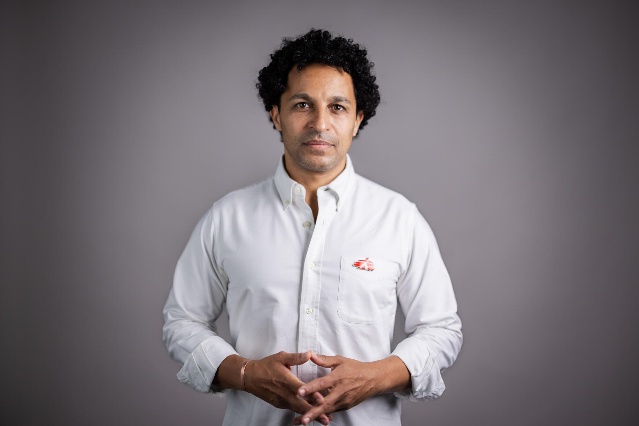
About Dr. Javid Abdelmoneim
Dr. Mohamed Javid Abdelmoneim is a Sudanese Iranian emergency medicine doctor, with extensive experience in both the United Kingdom’s National Health Service and with Médecins Sans Frontières (MSF). Dr Abdelmoneim first joined MSF in 2009 as an emergency doctor in Iraq and went on to work with MSF in various medical and coordination roles in Haiti, Ethiopia, Syria, and more. His most recent medical work with MSF has been in Gaza, Palestine, and Sudan. Outside of medical roles, Dr Abdelmoneim is an experienced television presenter, having worked on health and science entertainment series that have appeared on Netflix, BBC, and HBO. Dr Abdelmoneim is the International President of MSF, a position he was elected to by his peers and that he took up in September 2025.
Learn more here: https://www.msf.org/javid-abdelmoneim-new-msf-international-president
2025 Weintz Humanitarian Award
Dr. Tedros Adhanom Ghebreyesus to receive the 2025 Harvard Humanitarian Initiative Elisabeth B. Weintz Humanitarian Award
The Harvard Humanitarian Initiative (HHI) has selected Dr. Tedros Adhanom Ghebreyesus, Director-General of the World Health Organization (WHO), as the 2025 HHI Elisabeth B. Weintz Humanitarian Award recipient. Dr. Tedros visited Harvard on October 7–8, 2025 to attend the award ceremony and delivered a lecture to the community (view the full lecture transcript here). It was a return visit to campus for Dr. Tedros—he served as the commencement speaker for Harvard Chan School in 2021.
HHI nominated Dr. Tedros due to his extraordinary impact as a humanitarian leader on the world stage. From leading global health initiatives on HIV/AIDS, malaria, and maternal and child health to coordinating a robust international response to threats such as Ebola, COVID-19, and mpox, Dr. Tedros has championed public health. He is a committed advocate for universal health coverage and adeptly navigates complex political and diplomatic situations to protect the health and well-being of people in conflict zones, such as Ethiopia, Gaza, Sudan, and Ukraine. His unique accomplishments have lifted the health of nations.
With degrees in biology, the immunology of infectious diseases, and a doctorate in community health, Dr. Tedros has held many leadership positions in global health. Before taking the helm as WHO Director-General in 2017, he served within the Ethiopian government as Minister of Health and Minister of Foreign Affairs, leading transformative improvements in health infrastructure and negotiating funding for the Sustainable Development Goals. He was re-elected for a second term at WHO in 2022.
“We are honored to award this year’s HHI Weintz Humanitarian Award to Dr. Tedros for his extraordinary resilience in addressing global health emergencies and his tireless work to improve the lives of millions of people in crises around the world,” said Dr. VanRooyen. "Dr. Tedros embodies the values of the global humanitarian community with his powerful and strategic advocacy for individuals and communities in need."
HHI Weintz Award nominees are selected based on their extraordinary contribution towards alleviating human suffering. They are recognized leaders serving as humanitarian role models who have demonstrated unique accomplishments to improve the lives of communities in humanitarian crisis. Nominees hold an established record of achievement and impact in the humanitarian field, and have exhibited efforts to promote human rights, tackle historical injustices, and promote local and national organizations. Candidates for the award were nominated and reviewed by the HHI Awards Committee, who determined the finalists and the final recipient. Past recipients include: Peter Maurer (2016), Nancy Lindborg (2017), Nadia Murad (2018), Bryan Stevenson (2019), and Heba Aly (2023).
About The World Health Organization

Founded in 1948, WHO is a United Nations agency that connects nations, partners, and people to promote health, keep the world safe, and serve the vulnerable. Dedicated to the well-being of all people and guided by science, WHO leads and champions global health efforts to expand universal health coverage. It also directs and coordinates the world’s responses to health emergencies, including pandemics, disease outbreaks, natural disasters, and humanitarian crises. Its multitude of initiatives aim to create a world where everyone, everywhere, can be healthy and thrive.
Learn more here: https://www.who.int/
About Dr. Tedros Adhanom Ghebreyesus

Dr. Tedros Adhanom Ghebreyesus was first elected Director-General of the World Health Organization by the World Health Assembly in May 2017. He was re-elected to a second five-year term in May 2022. Dr. Tedros is the first person from the WHO African Region to head the agency.
Born in 1965 in the city of Asmara—then part of Ethiopia, now Eritrea—Dr. Tedros graduated from the University of Asmara with a bachelor’s degree in biology, before earning a Master of Science degree (MSC) in Immunology of Infectious Diseases from the University of London, and a Doctorate of Philosophy (PhD) in Community Health from the University of Nottingham. He is also an Honorary Fellow of the London School of Hygiene and Tropical Medicine.
Dr. Tedros was Minister of Health of Ethiopia from 2005 to 2012, during which he led a comprehensive reform of Ethiopia’s health system, built on the foundation of universal health coverage and the provision of services to all people, even in the most remote areas. A major component of the reforms was the creation of a primary health care extension program, which deployed 40,000 female health workers throughout Ethiopia. This program resulted in a 60% reduction in child and maternal mortality compared with levels in 2000. As Minister of Foreign Affairs from 2012 to 2016, Dr. Tedros elevated health as a political issue nationally, regionally, and globally.
Dr. Tedros has held many leadership positions in global health, including as Chair of the Global Fund to Fight AIDS, Tuberculosis, and Malaria, Chair of the Roll Back Malaria Partnership, and Co-chair of the Board of the Partnership for Maternal, Newborn and Child Health.
After taking office as WHO Director-General, Dr. Tedros initiated the most significant transformation in the organization’s history with the aim of making WHO a more data-driven, impact-focused entity in three key areas: promoting health; providing health by supporting countries to progress towards universal health coverage; and protecting health by strengthening national, regional, and global capacities to prepare for, prevent, and respond to health emergencies.
Learn more here: https://www.who.int/director-general/biography
Photo courtesy World Health Organization



