
How can collaboration support community resilience? 10 impact lessons over 10 years of programming in Asia
(Part 3 of 3)
By HHI Resilient Communities

Collaboration is another cornerstone of community resilience building. It brings together diverse expertise, resources, and perspectives needed to address complex challenges like disasters and climate change. It enables shared ownership and accountability of both problems and solutions, ensuring interventions are relevant to local needs and contexts.
At HHI Resilient Communities, we believe solutions are most effective when developed together with local partners. Over the past decade, we catalyzed cross-sector coordination and collaboration with dozens of local partners in the Philippines, Bangladesh, and Nepal to co-create research, resilience tools, and action plans.
In this last part of our blog series, we discuss three takeaways from our collaboration initiatives, which complete our top ten impact lessons over our ten years of programming in Asia.
8. Convening and collaboration with different sectors strengthen local networks and spark new initiatives.
Bringing together government, academia, humanitarian agencies, and community groups creates powerful networks for ideas and action. Over the years, HHI RC served not just as a research program but as a catalyst for connection and collective action in the countries it served.
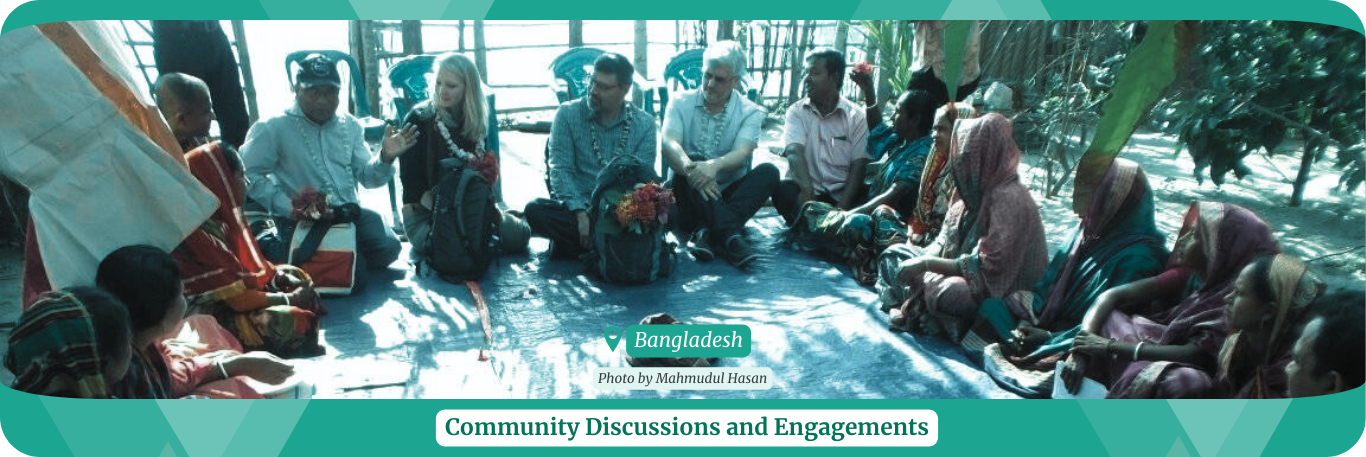
What we did:
HHI RC convened diverse actors through high-impact workshops, forums, and convenings that created safe spaces for shared learning and collaboration. We sparked cross-sector partnerships by bridging gaps between international and local humanitarian agencies, researchers, development organizations, policymakers, private sector representatives, and community leaders. We formed in-country research advisory groups—representing different local and international organizations and institutions—to inform our research agenda and support our broad engagement efforts. Furthermore, we participated in and contributed our expert insights to various local technical working groups and committees, addressing different issues related to resilience.
Our Impact:
HHI RC catalyzed the formation of a technical working group and study on the climate–conflict nexus in the Philippines, with leadership from UNOCHA and active participation from local humanitarian organizations. Our convenings inspired new initiatives and research partnerships that continue to drive momentum beyond the events themselves. Ultimately, we created spaces for meaningful dialogue that generated practical ideas, collaborative solutions, and shared commitment toward resilience and sustainability.
Local Insights:
"Collaboration with HHI allowed us to bring academic rigor to complex challenges at the intersection of conflict, climate change, humanitarian, and development fields by bridging concepts and practice on emerging issues. Under the Mindanao Humanitarian Team (MHT), OCHA and humanitarian partners engaged with HHI in a meaningful discourse and exchange of expertise and knowledge."
- Melindi Malang, Head of OCHA Cotabato Sub-Office and Lead of Mindanao Humanitarian Team
"My interactions with HHI have been nothing short of inspiring. Our multi-stakeholder workshop on climate change was a pivotal moment since it became a convergence of local NGOs, international organizations, and academia to share different perspectives but united with a common purpose – to safeguard our planet. It was more than a workshop; it was a crucible of collaboration that allowed for ideas to flow freely and solutions to appear."
- Sittie Noffaisah B. Pasandalan, MA Assistant Dean, College of Arts and Social Sciences, Mindanao State University, Iligan Institute of Technology
9. Linking countries with similar yet diverse issues can foster cross-country learning.
Our experiences in Bangladesh and the Philippines demonstrated the value of cross-country exchange. Pilot projects, tool adaptation, and shared learning accelerated regional thinking and innovation in resilience measurement, climate adaptation, and disaster planning. By nurturing these connections, HHI RC helped advance a collective approach, preparing communities across Asia to learn from and support each other in building resilience to shared challenges.
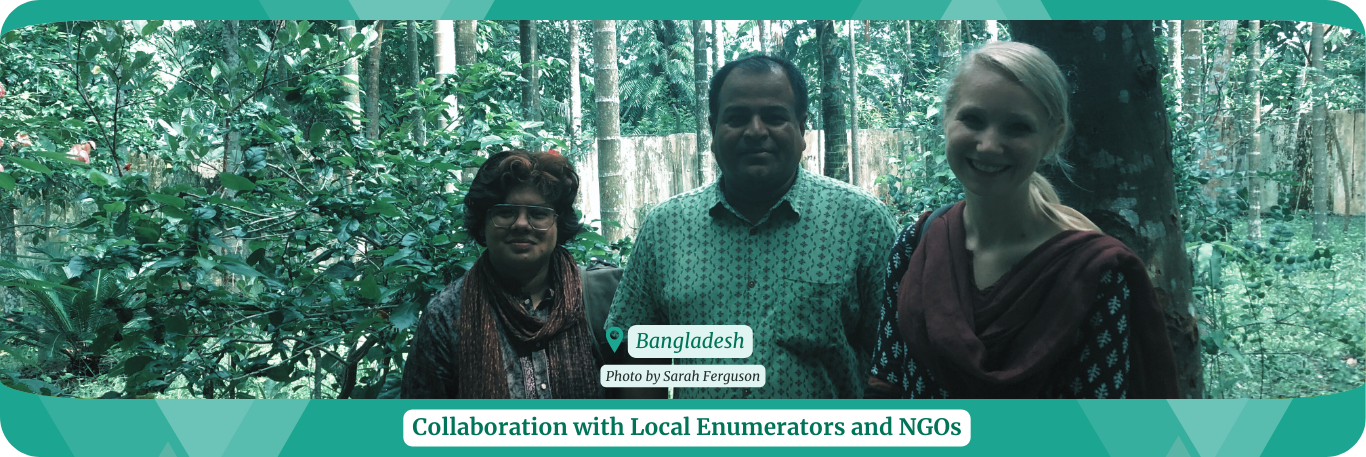
What we did:
HHI RC developed innovative tools to assess resilience, disaster preparedness, and climate change perceptions in Bangladesh and the Philippines, such as a resilience scorecard for households in disaster-prone communities and a network analysis to understand how climate and disaster resilience actors and programs interact in each country.
Our Impact:
Deploying similar research tools and methodologies in countries with similar yet unique challenges in disaster and climate resilience enabled knowledge exchange and cross-country learning between Bangladesh and the Philippines. This approach, when scaled up to the broader part of the region, can advance regional thinking and collective action on resilience programming. This realization inspires us at HHI RC to bring our research-to-action programming model to the broader Southeast Asia region in the coming years.
Local Insights:
"HHI provides a unique and valuable contribution to building resilience through community-based disaster risk reduction research that strengthens the resilience of local communities and their systems. This work supports practical applications such as disaster response, early warning, DRR organizing, and coordination with local governments and other stakeholders."
- Winston Regarde, Founder, Worldwide Disaster Risk Reduction Network
10. Cultivating local expertise reinforces local trust and sustainable solutions.
Local experts possess an intimate understanding of their country's unique contexts, needs, and socio-political dynamics. In resilience research, the combination of global and local expertise and capabilities solidifies the quality, credibility, and sustainability of research outcomes and solutions.

What we did:
HHI RC's program practice always includes hiring full-time team members based in the countries where our research takes place to ensure our work remains locally grounded and contextually relevant. Similarly, all of our research is conducted in partnership or in collaboration with local experts, organizations, or communities. This process involves not only the sharing of knowledge, skills, and resources but also mentorship for students and early-career researchers, as well as training for enumerators and analysts in designing and implementing studies. At HHI RC, we strongly believe that local experts deeply understand their country's culture, challenges, and sensitivities. Their insights and experience ensure that research and engagements are appropriately tailored and more likely to succeed in the local context.
Our Impact:
Our direct engagement with local experts fostered strong trust and acceptance of resilience research, amplified local voices in resilience research, and achieved high participation rates in engagement activities. Additionally, we received a strong interest in collaboration and interactions from local experts, enthusiasts, and communities. Our local colleagues, past and present, have also generated many impactful outcomes in the resilience space outside of HHI RC—through working in the government, the private sector, civil society, and membership in local and international networks. These successes are all great indicators of long-term, sustainable impact.
Local Insights:
"For climate justice, my HHI RC experience added to my career path on environmental governance and conservation, transparency, human rights education, anticipatory action and localized climate finance as well as forecast-based financing. While passion ignites our climate action, it must also be evidence-based and participatory for the affected populations/communities. As a former project lead, I am grateful to HHI RC for deepening my roots in addressing the complex social and ecosystem structures toward a sustainable and resilient planet."
- Lea Ivy Manzanero, independent researcher
We hope you enjoyed reading our blog series featuring our top ten impact lessons! The past decade of HHI Resilient Communities' programming has shown us that generating data and evidence, fostering collaboration, and translating evidence into action are crucial processes for strengthening the resilience of communities. HHI RC has been able to catalyze collective action and lasting impact, but it is far from enough. As we look ahead, it is clear that the challenges of disaster and climate change demand robust research, strategic communications and engagement, and local collaboration. Our commitment remains firm: to work hand in hand with communities and partners to reinforce resilience systems and empower communities in Southeast Asia not only to adapt, but to thrive.
Read the other parts of this blog series:
Part 1
How can research support community resilience?

In this three-part blog, we share ten key lessons we have learned from ten years of programming—demonstrating how research, convening, engagement, and translation of evidence into action can cultivate more resilient and thriving communities. To start, we spotlight four notable learnings about how the data and evidence generated by our research impact local resilience programming... Read more
Part 2
How can communication support community resilience?

At HHI Resilient Communities, communications have always been an integral element of our research work. In this second part of our blog series, we share the top three lessons from our impactful communications initiatives in the Philippines, Bangladesh, and Nepal over the past decade... Read more